MOLD CENTER SOLUTIONS

Mold Design Showcase for Amorphous Alloys

A real-world folding phone hinge case demonstrating the complete development and production process for bulk metallic glass molds.

From product requirements and composite material selection to precision machining, mold trials, and stable mass production.

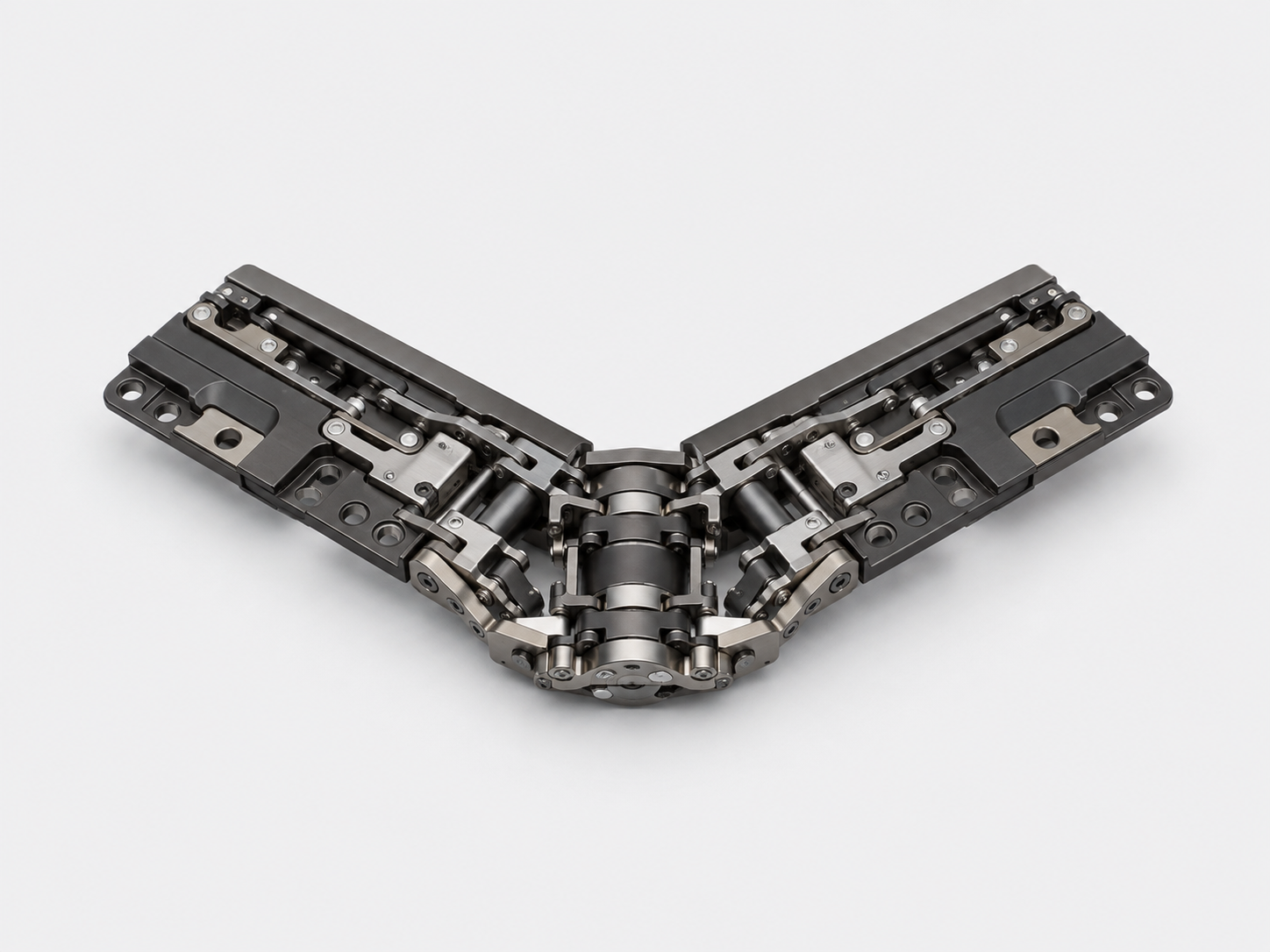
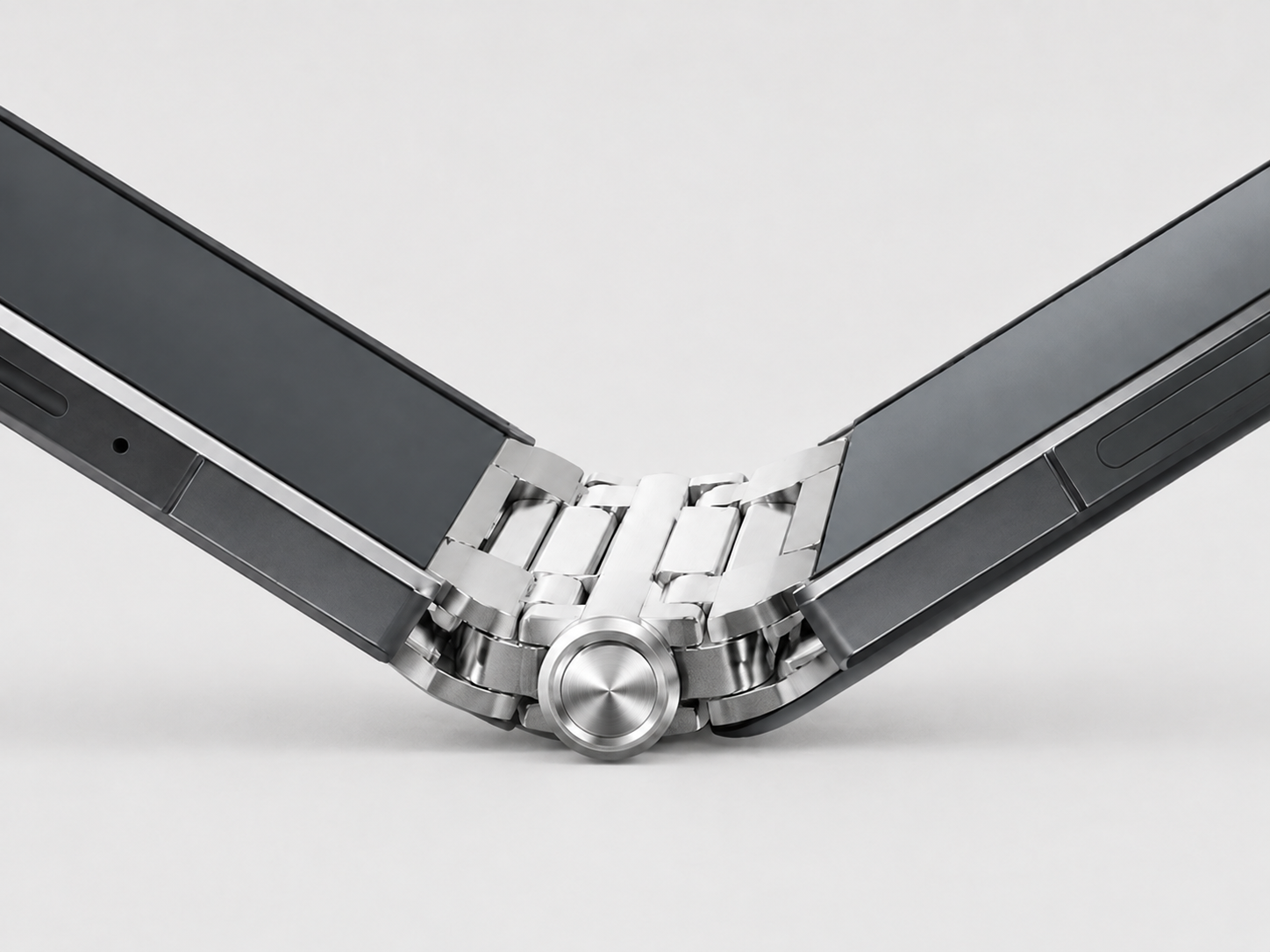
Precision mold and amorphous alloy folding phone hinge assembly
CASE OVERVIEW

Folding Phone Hinge Mold Development

In recent years, bulk metallic glass (BMG) has been increasingly used in high-end consumer electronic products due to its high strength, high elasticity, wear resistance, and excellent surface texture.

One very typical application is precision structural components for folding phone hinges. These products are small in size, complex in structure, and have extremely high precision requirements.

This case demonstrates the complete process of developing and producing molds for an amorphous alloy folding phone hinge assembly.

01 / PRODUCT REQUIREMENTS & MATERIAL SELECTION

Small Structure, Extremely High Precision

The product combines an ultra-thin structure, complex integrated geometry, high-frequency opening-and-closing loads, and strict surface-quality requirements.
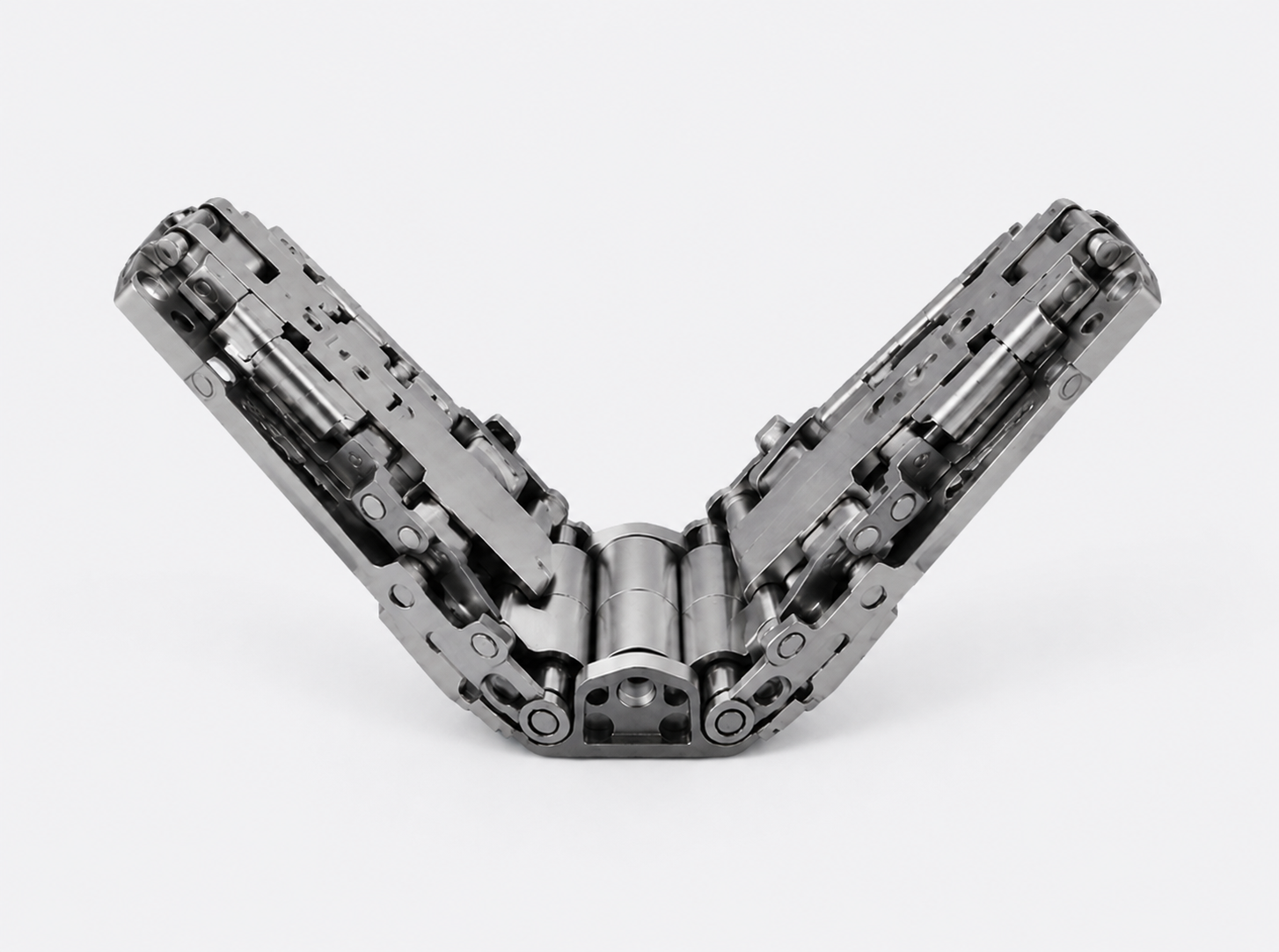
Precision amorphous alloy folding phone hinge assembly
Product Name Amorphous Alloy Folding Phone Hinge Assembly

Product Features

  • Ultra-high strength
  • Ultra-thin structure
  • High-frequency opening and closing fatigue resistance
  • Micron-level precision
  • High surface finish
  • Small and complex structures
  • Micro complex structures formed in one piece

Technical Difficulties

  • Prevent local crystallization
  • Avoid pores and shrinkage
  • High consistency in mass production
  • High mold lifespan requirements
AMORPHOUS ALLOY MATERIAL

Bulk Metallic Glass Selection

Common Types Include

  • Zr-based bulk metallic glass (BMG)
  • Ti-based bulk metallic glass
  • Multicomponent bulk metallic glass materials

Reasons

  • High strength
  • Good elasticity
  • Excellent molding capability
  • Superior surface finish
MOLD MATERIAL SELECTION

Composite Mold Structure

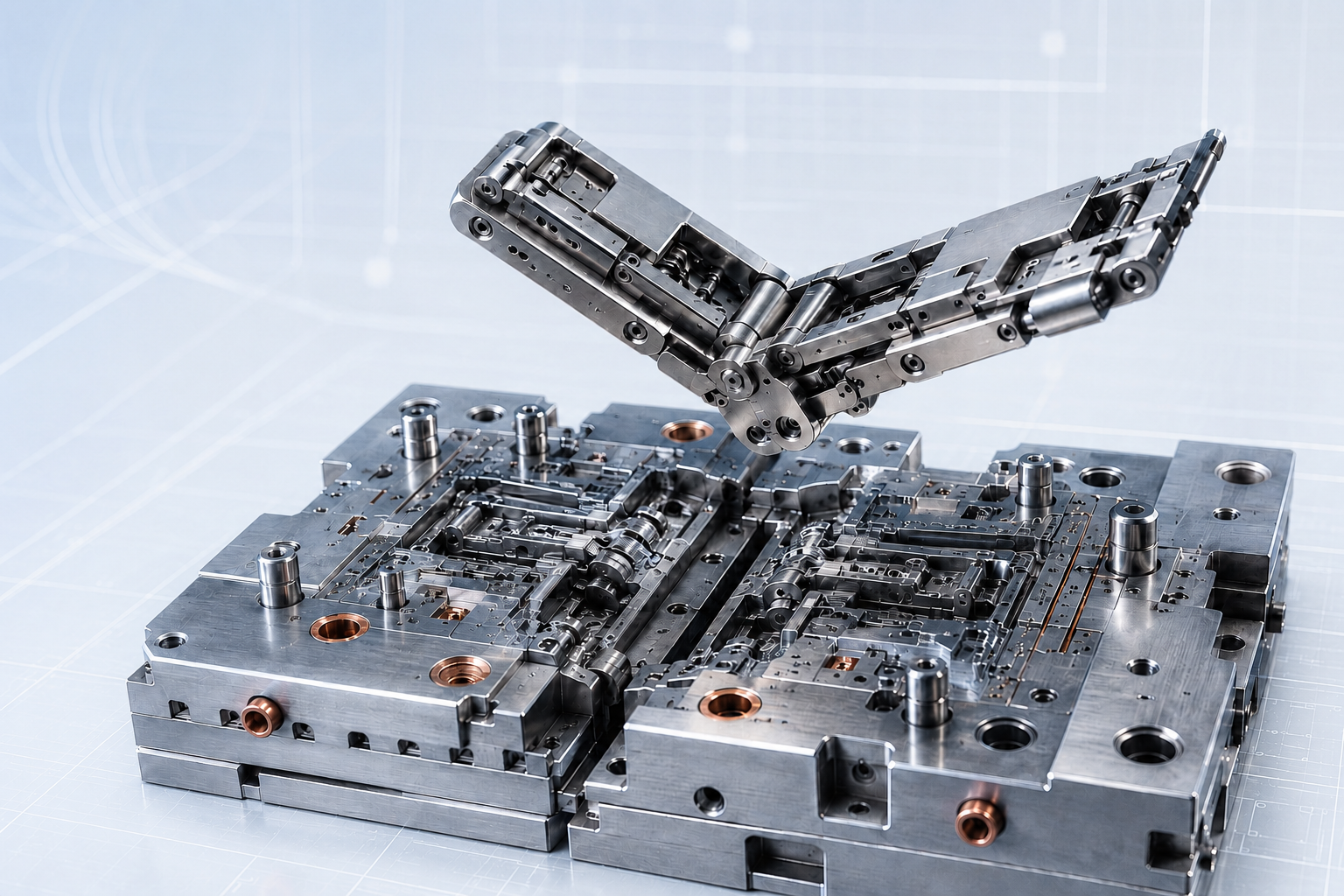
Because the product features a complex, highly precise structure and extremely small dimensions, the mold typically adopts a composite structure.

Mold Area Materials Used
Mold Body H13 / SKD61
High-Wear Area Tungsten Steel
Cooling Insert Beryllium Copper
Microstructure Area Superhard Alloy
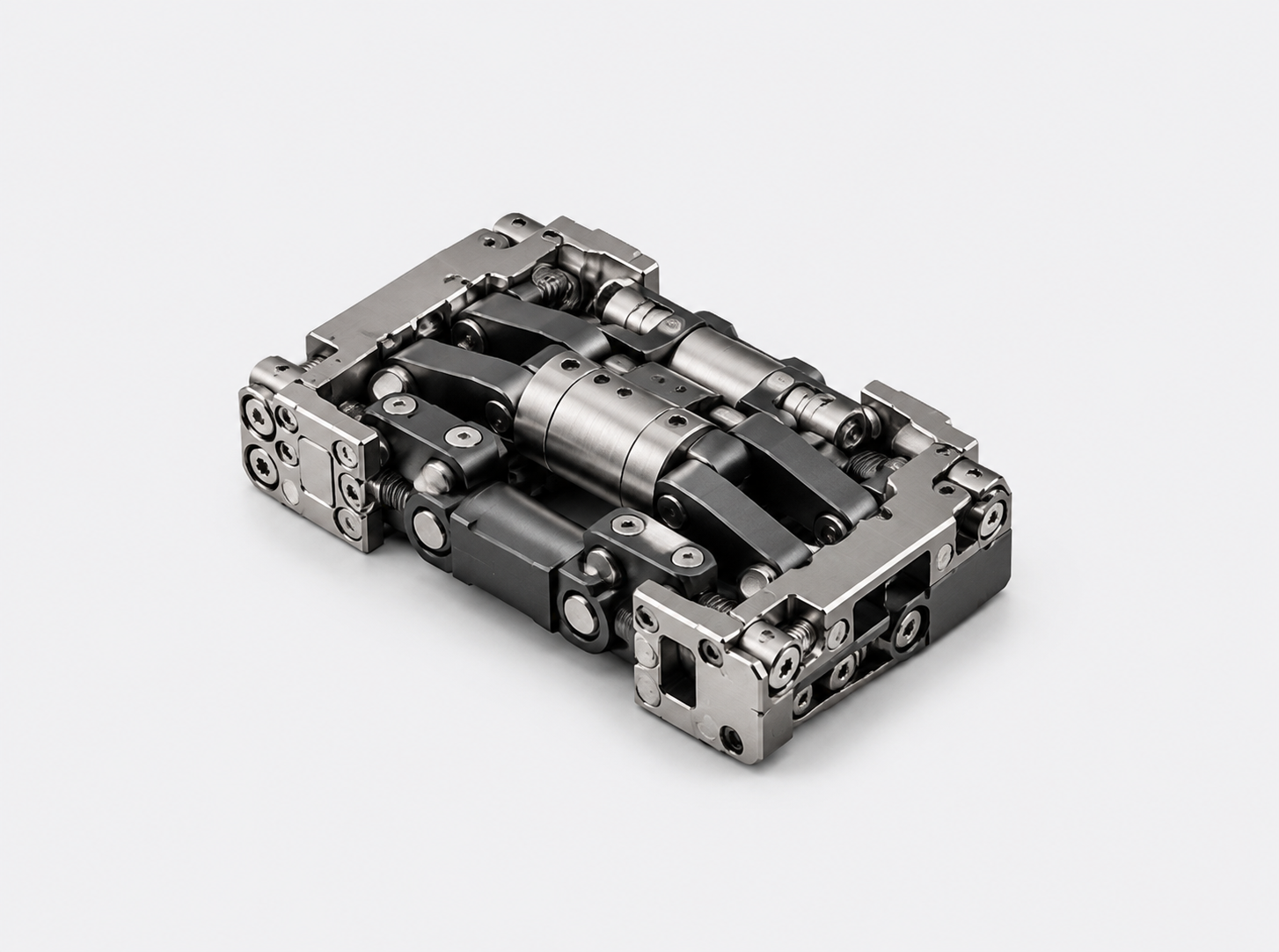
Amorphous alloy folding phone hinge assembly
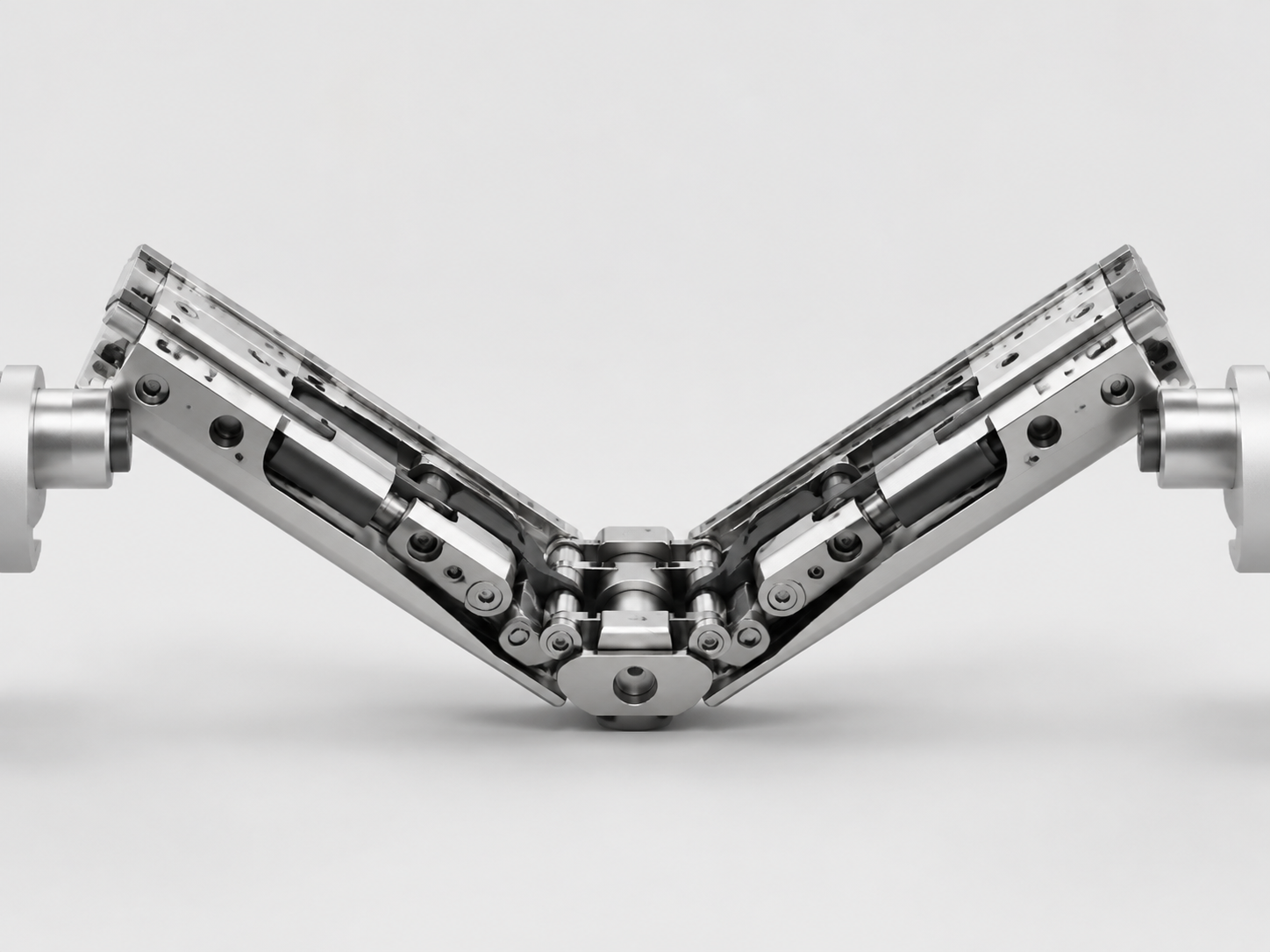
Precision folding phone hinge structural components
Technical drawing of a folding phone hinge structure
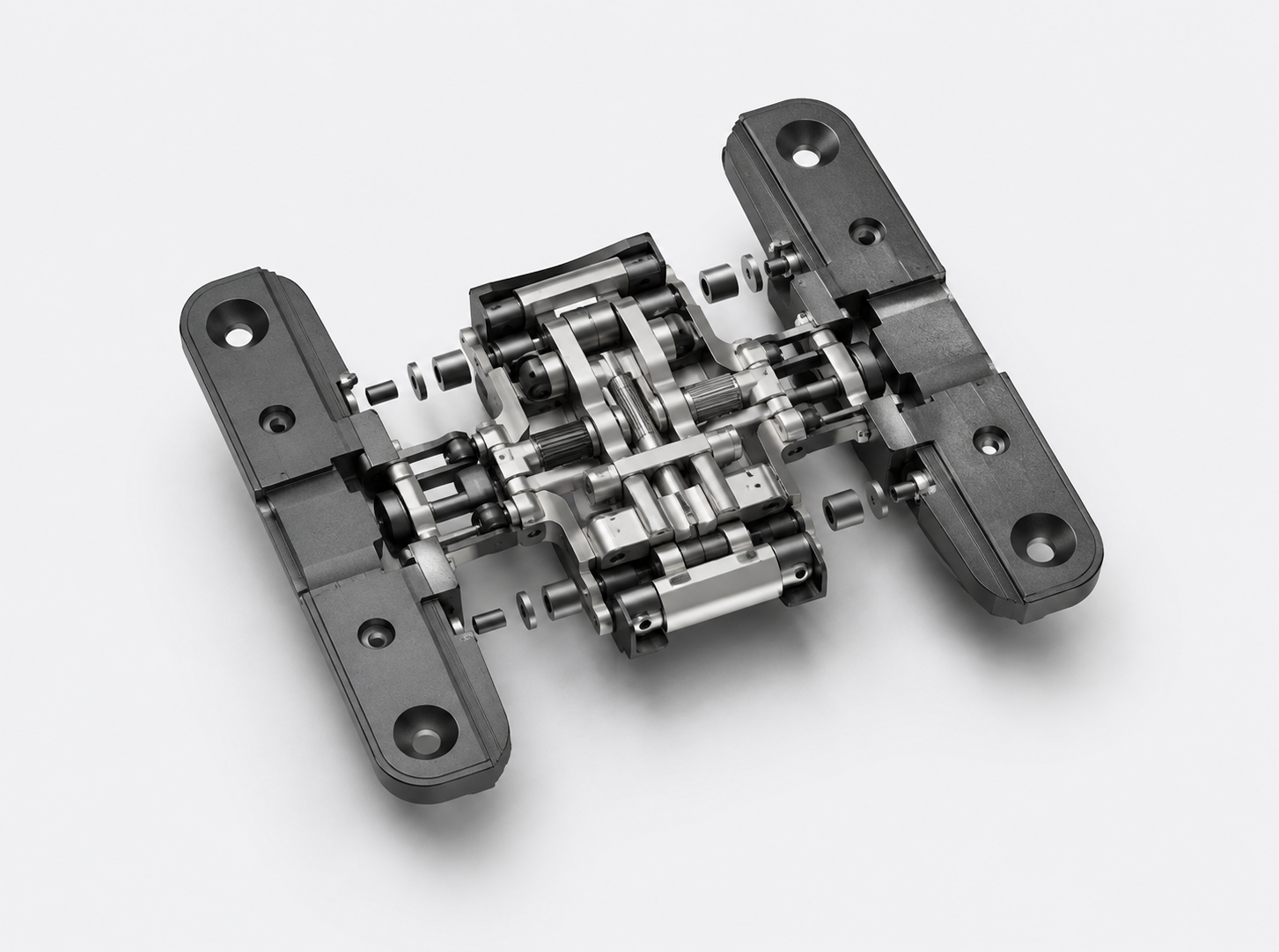
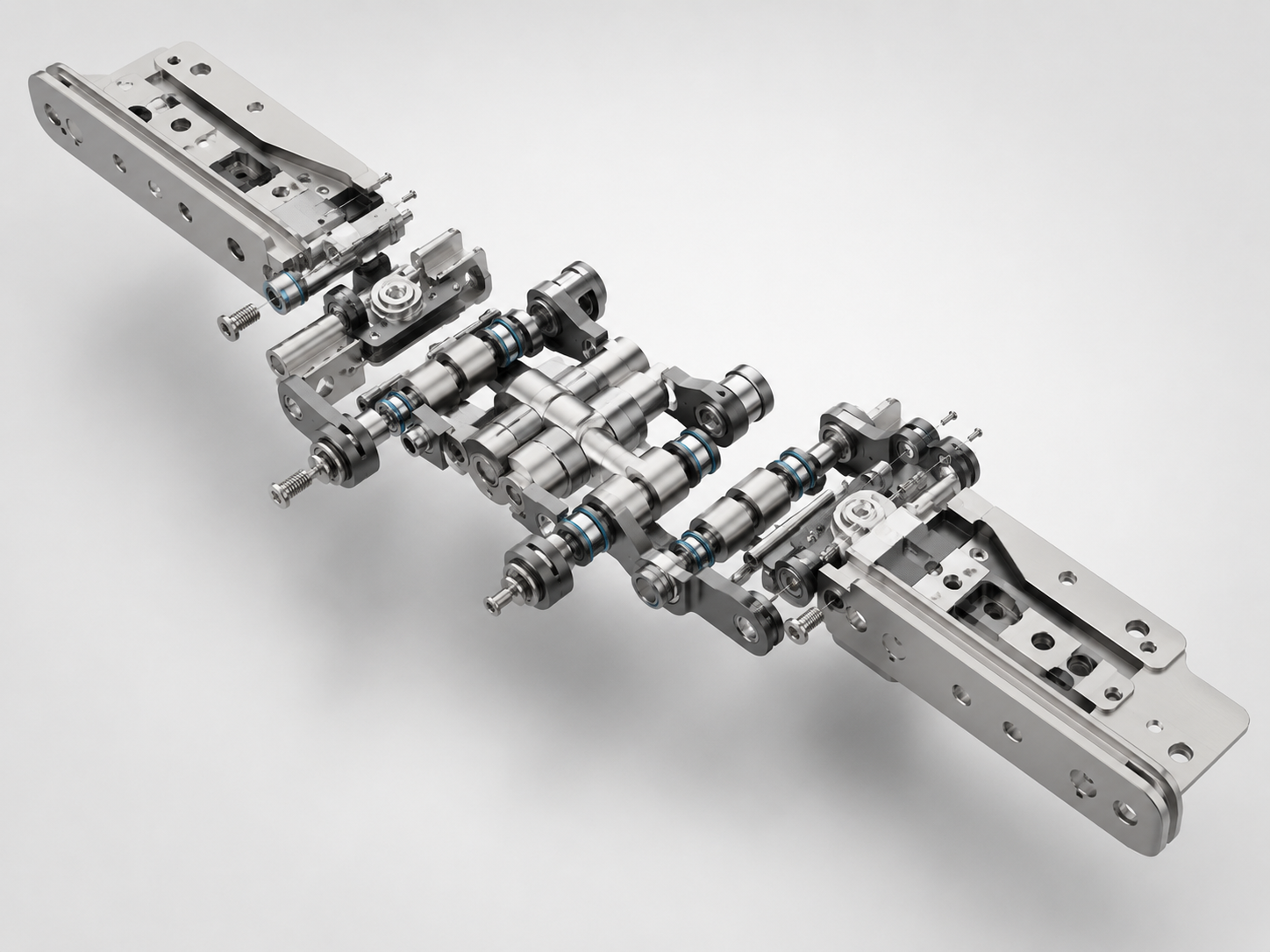
Exploded structural reference of a folding phone hinge
02 / MOLD DESIGN PHASE

Engineering the Mold for Precision Forming

Mold design is one of the most critical stages of the entire project. It determines filling quality, cooling uniformity, forming stability, and the risk of local crystallization.

01
PRODUCT MODELING

3D Product Modeling

Based on the product drawings, the engineering team first establishes the 3D CAD model, mold-flow analysis model, and thermal-flow-field model.

Design Objectives

  • Ensure complete filling
  • Avoid turbulence during material flow
  • Improve cooling uniformity
  • Reduce the risk of crystallization
02
FLOW SYSTEM DESIGN

Runner and Gate Design

The processing window of amorphous alloys is very narrow, so the runner and gate system must be designed with exceptional precision.

Key Design Elements

  • Gate location
  • Injection path
  • Runner balance
  • Venting system

Otherwise, local crystallization, material deficiency, porosity, and internal stress can easily occur.

3D mold design and flow analysis for a folding phone hinge
3D product modeling, mold-flow analysis, and runner-system design
03
THERMAL CONTROL

Cooling System Design

Since amorphous alloys must be cooled rapidly, the mold interior typically incorporates micro cooling channels, zoned temperature control, and high-thermal-conductivity copper inserts.

Cooling Strategy

  • Micro cooling channels
  • Zoned temperature control
  • High-conductivity copper inserts
  • Uniform thermal-field control
Design Goal

The goal is to achieve uniform cooling in a very short time and maintain the stability of the amorphous structure.

03 / MOLD MANUFACTURING

Precision Mold Processing and Surface Treatment

This stage requires extremely high machining precision, followed by surface strengthening to reduce adhesion and extend mold life.

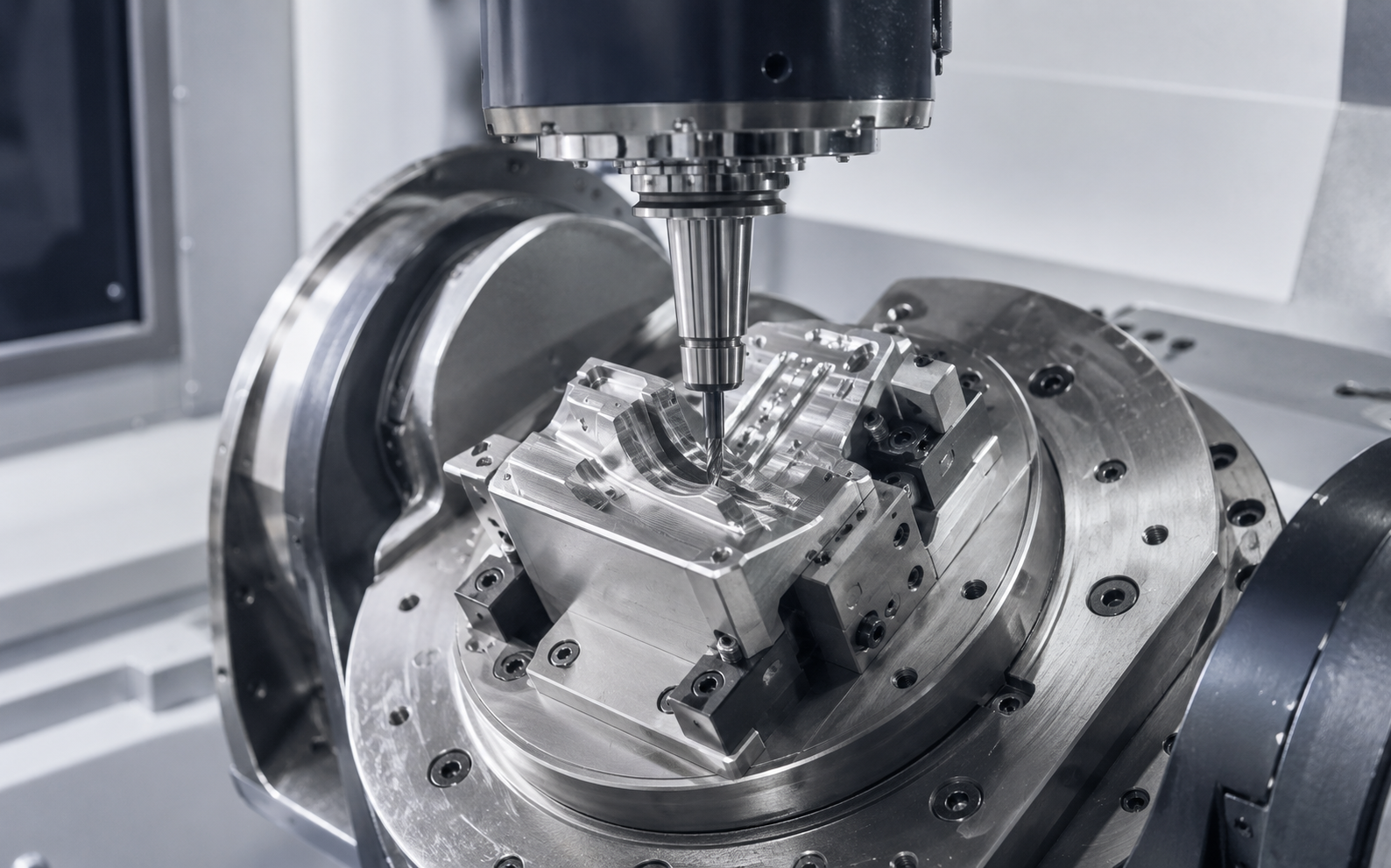
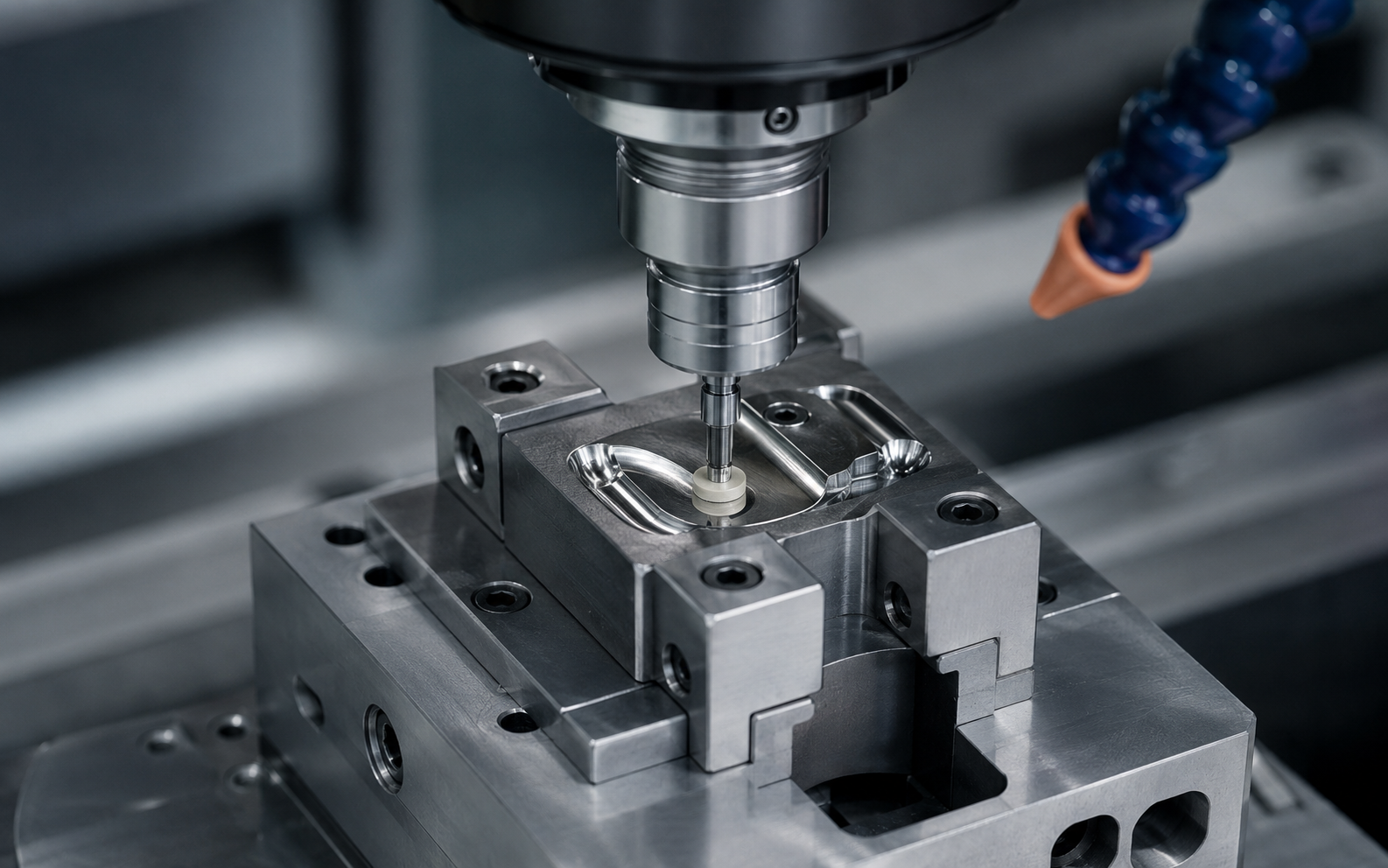
Five-axis CNC machining of a precision mold
01
COMPLEX MACHINING

5-Axis CNC Machining

Used for mold bodies, curved structures, and complex micro cavities.

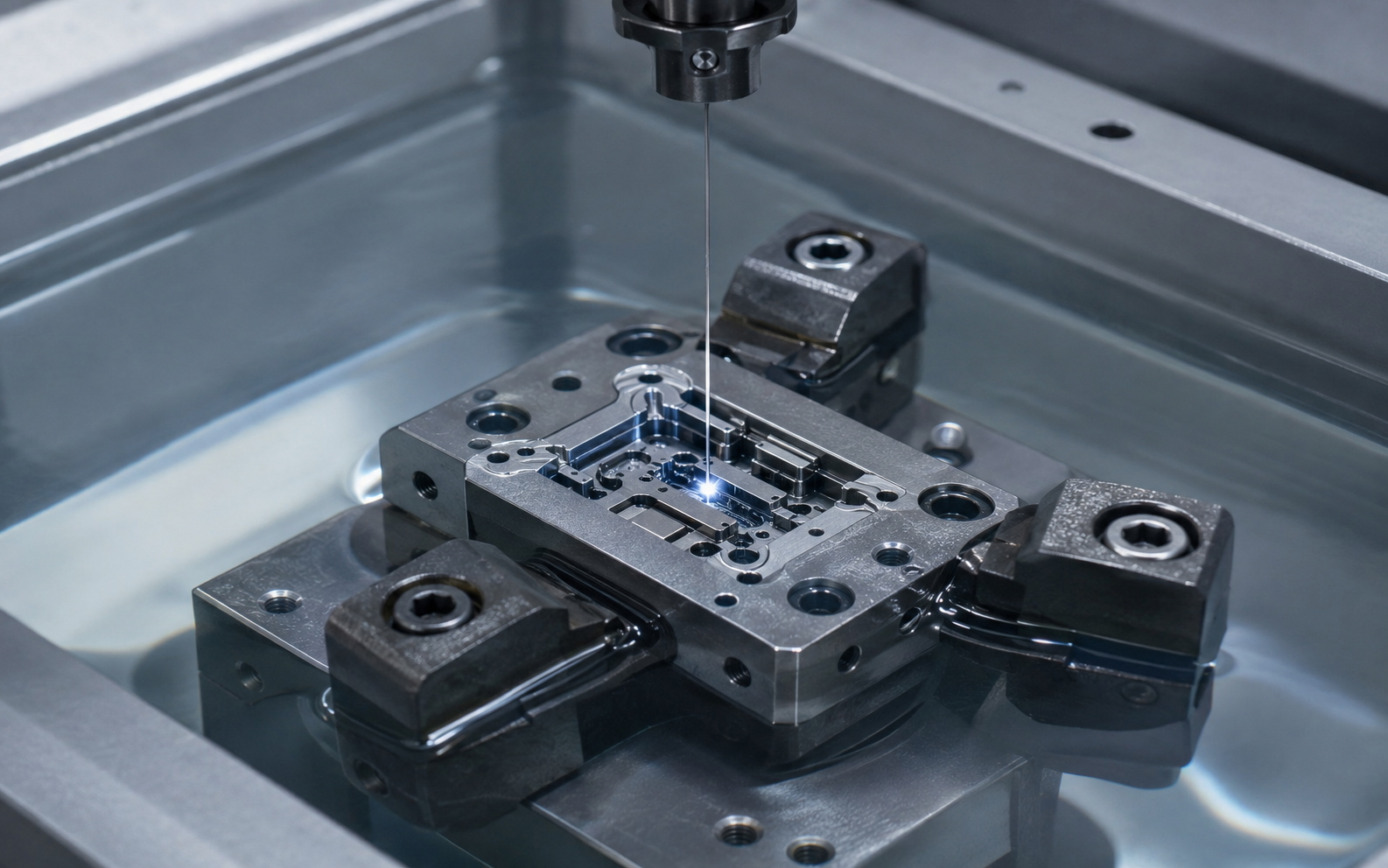
Precision EDM processing of micro mold features
02
MICRO-FEATURE PROCESSING

Precision EDM

Used to manufacture micro-holes, sharp angles, and ultra-fine structures.

Ultra-precision grinding and mirror polishing of a mold surface
03
SURFACE FINISHING

Grinding and Polishing

Targets Ra ≤ 0.2 μm to improve demolding performance and reduce mold sticking.

04 / MOLD SURFACE TREATMENT

Mold Surface Treatment and Strengthening

Since amorphous alloys are prone to sticking to molds, surface strengthening is necessary.

01
SURFACE PROCESSES

Common Processes

  • DLC diamond-like coatings
  • PVD vacuum coatings
  • Nitriding treatment
02
ENGINEERING FUNCTIONS

Functions

  • Improving wear resistance
  • Preventing material sticking
  • Enhancing demolding stability
  • Extending mold life
05 / MOLD TRIAL AND OPTIMIZATION

Validation Before Mass Production

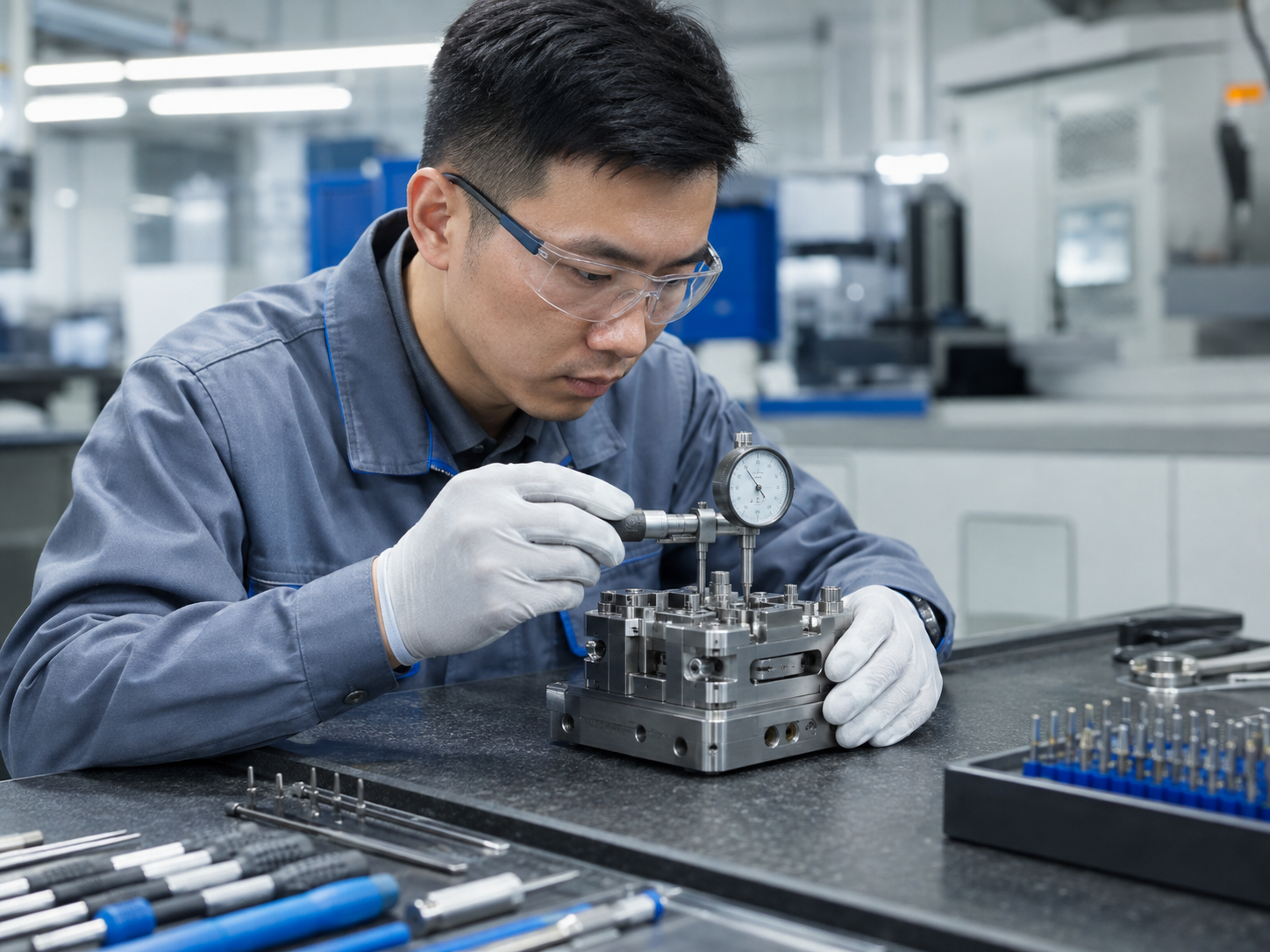
After the mold is completed, it cannot enter mass production directly. Multiple trial rounds such as T0, T1, and T2 are required to validate material formation, dimensional accuracy, surface quality, and thermal control.

Amorphous Formation Rate

Check whether crystallization occurs during forming and cooling.

Dimensional Accuracy

Verify whether the component meets micrometer-level tolerances.

Surface Quality

Inspect scratches, porosity, flow marks, and shrinkage holes.

Mold Temperature Control

Monitor cooling uniformity and thermal concentration areas.

06 / MASS PRODUCTION

Control Points for Stable Production

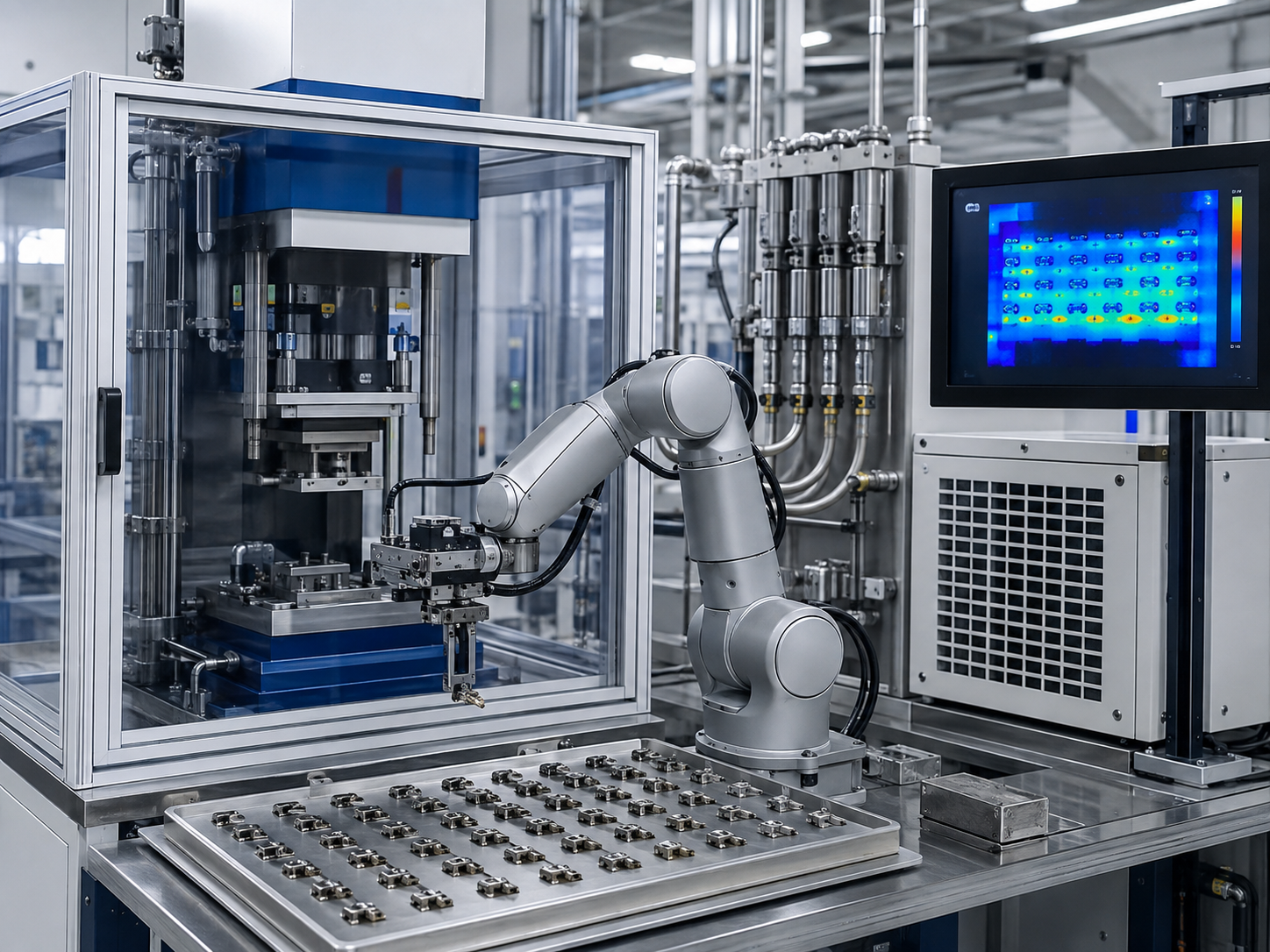
After multiple optimization rounds, the mold enters formal production under tightly controlled temperature, tool-life, and online-inspection conditions.

01

Temperature Control

The amorphous alloy processing window is extremely narrow.

  • Precise melting-temperature control
  • Real-time mold-temperature monitoring
02

Mold Life Management

Critical areas are monitored throughout repeated production cycles.

  • Gate wear
  • Microstructure degradation
  • Thermal-fatigue cracks
03

Online Inspection

Automated measurement maintains dimensional consistency.

  • AI visual inspection
  • Coordinate measuring machine
  • Automatic dimensional compensation
07 / PRODUCTION TROUBLESHOOTING

Common Problems in Actual Production

Three recurring risks require coordinated changes to mold materials, cooling, runners, coatings, and maintenance strategy.

01 / Local Crystallization

Causes

  • Uneven cooling
  • Local overheating of the mold

Solutions

  • Add copper-alloy cooling inserts
  • Optimize the runner system
  • Adjust injection parameters

02 / Mold Material Adhesion

Causes

  • Insufficient surface finish
  • Coating failure

Solutions

  • Repolish the mold surface
  • Repair the DLC coating

03 / Microstructure Wear

Causes

  • High-frequency mass production
  • High hardness of amorphous materials

Solutions

  • Replace tungsten-steel inserts
  • Use modular maintenance design
08 / FINAL PRODUCT EFFECT

Precision Hinge Performance

The final amorphous alloy smartphone hinge combines mechanical performance, dimensional consistency, and a premium metallic appearance.

This is also one of the important reasons why high-end consumer electronics currently make extensive use of amorphous alloys.

  • Ultra-high strength
  • Ultra-thin and lightweight
  • High wear resistance
  • High fatigue life
  • Precise dimensional consistency
  • Premium metallic texture
TYPICAL MOLD CASES FAQ

Questions About Precision Hinge Mold Development

Why is a composite mold structure used for this component?

Different mold areas face different thermal, structural, and wear requirements. Tool steel provides the main structure, tungsten steel supports high-wear areas, beryllium copper improves heat extraction, and superhard alloys protect fine features.

Why are multiple mold trials required?

Trial rounds verify amorphous formation, dimensional accuracy, surface quality, cooling uniformity, and the stability of the processing window before mass production.

Which production risks require the closest monitoring?

Local crystallization, mold adhesion, microstructure wear, gate wear, thermal-fatigue cracking, and dimensional drift are monitored throughout production.

What information is needed to evaluate a similar project?

Share the product drawing or 3D model, alloy system, critical dimensions, surface requirements, target production volume, cycle requirements, and expected mold life.

REQUEST A QUOTE

Discuss Your Precision Mold Project

Share your alloy system, component geometry, tolerances, surface requirements, production volume, and forming conditions. Our engineering team can evaluate the complete mold-development route.